


The 2026 Legal Guide to Short‑Term Rental Laws in Kenya: What Every Host Needs to Know

Author: Oscar Murimi
Short-Term Rental Specialist | Helped 200+ Kenyan property owners launch rentals | Managed KES 50M+ in bookings.
Owning a high‑end rental in Nairobi’s “golden triangle” (Kilimani, Westlands, Lavington) or a beach villa in Diani can be a powerful investment. But by 2026, the days of quietly listing on a platform and hoping no one notices are gone. This guide provides insight into the short-term rental laws in Kenya.

County governments, the Tourism Regulatory Authority (TRA), and KRA are all paying much closer attention to short‑term rentals.
At Trubay Stayz, our job is to bring you high‑quality guests and manage a smooth booking experience. Your job, as the host, is to stay on the right side of the law.
This guide walks you through the key short-term rental laws in Kenya, so you understand what’s required—and where a little preparation can save you a lot of stress.
1. The Tourism Regulatory Authority (TRA) License

If you’re operating a short‑term rental in Kenya—whether it’s a studio in Kilimani, a townhouse in Westlands, or a beachfront villa in Diani—you’ll likely sit under the Tourism Regulatory Authority’s radar.
What the TRA license is
The TRA license is the government’s way of confirming that your property:
- Meets basic safety standards.
- Is fit to host paying guests.
- Operates within the tourism and hospitality framework, not just as a casual side hustle.
Why it matters for serious hosts
For premium guests, especially corporates and international travellers, a TRA‑licensed property signals:
- Professionalism – you take hosting seriously, not as a random side gig.
- Safety – your building and setup meet national hospitality standards.
- Stability – less risk of sudden shutdowns or fines during their stay.
Your responsibility as a host
As the property owner or primary host, you are responsible for:
- Applying for the relevant TRA license.
- Preparing for and accommodating inspections.
- Renewing the license within the required timelines.
Where Trubay Stayz fits in
We don’t apply for or manage licenses on your behalf, and we don’t file your paperwork. But we strongly encourage our hosts to:
- Start the TRA process early.
- Keep copies of approvals and communications easily accessible.
The more compliant your property is, the more attractive it becomes to the high‑intent, high‑value guests Trubay Stayz focuses on.
2. County Government Permits and the Unified Business Permit (UBP)

Beyond national licensing, county governments also care about how your rental operates day‑to‑day.
What is the Unified Business Permit?
In counties like Nairobi and Mombasa, many short‑term rentals are treated as a form of business. A Unified Business Permit (UBP) can roll together several important approvals, such as:
- Fire safety certification.
- Public health inspections.
- Any local signage or business operation permissions.
Why can’t hosts ignore this?
Skipping county permits may feel harmless—until it isn’t.
If something goes wrong or a complaint is made, operating without the right permits can lead to:
- Fines or penalties.
- Surprise inspections at awkward times.
- In worst‑case scenarios, a forced suspension of operations.
That’s bad for your guests, your reviews, and your long‑term returns.
Your responsibility
As a host, you should:
- Confirm how your specific county treats short‑term rentals.
- Understand if your unit falls under the business classification.
- Apply for and renew any required UBPs or local permits.
A simple host habit that helps
Create a small “compliance folder”—digital or physical—with:
- TRA license copies.
- UBP / county permit documents.
- Any relevant inspection reports.
This keeps things simple if anyone ever asks to see proof.
3. Taxation and KRA: Understanding Your Rental Income Obligations
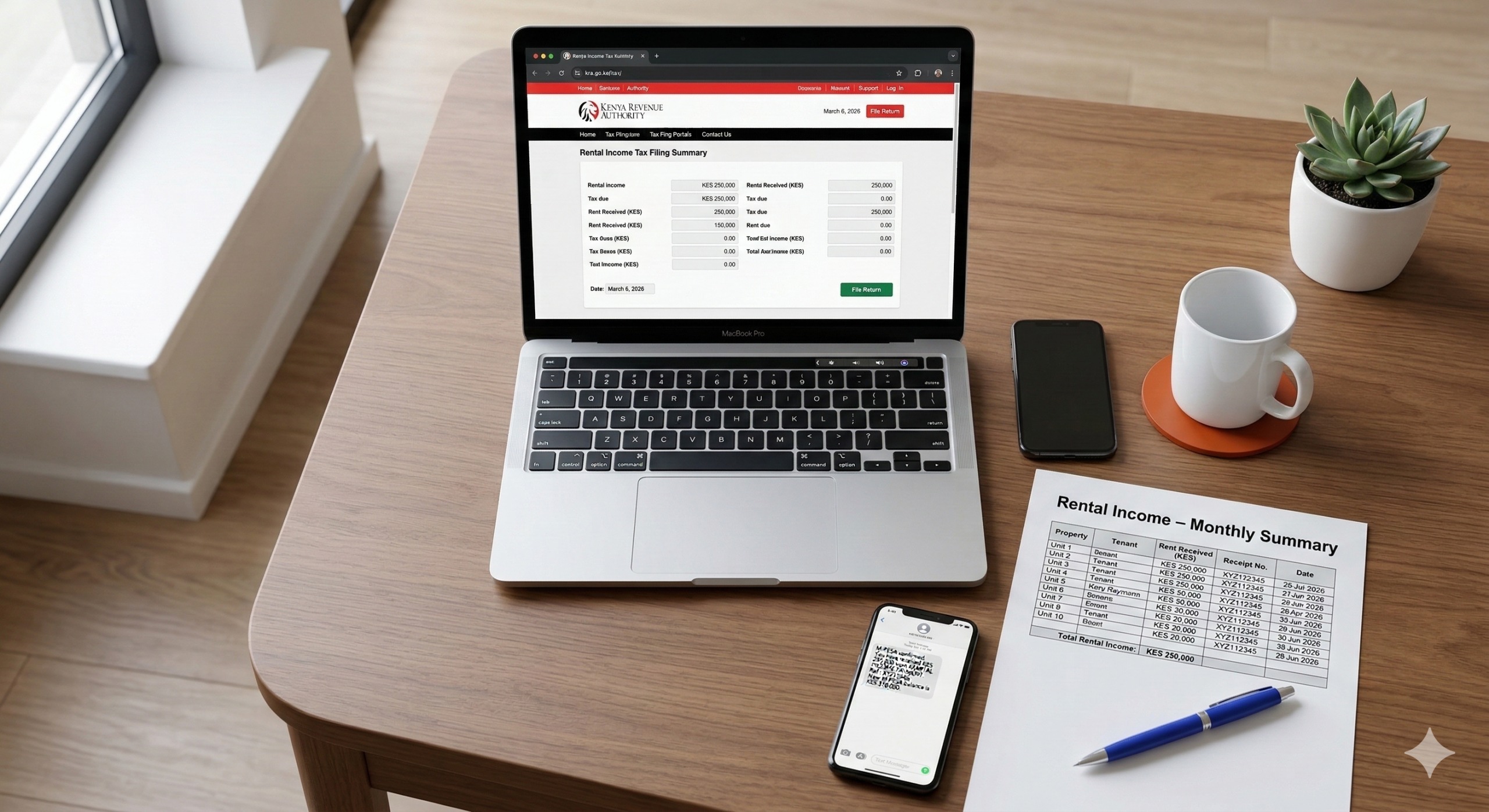
The Kenya Revenue Authority (KRA) has made it clear: short‑term rental income is very much on their radar.
As the vacation rental market grows, so does KRA’s focus on making sure hosts are properly declaring what they earn.
How rental income tax works in Kenya
The exact structure can vary based on how your rental business is set up, but in broad terms:
- Rental income tax is typically charged on income from letting out property.
- If you’re running things at scale or through a company, you may fall under corporate tax frameworks.
Always confirm the latest thresholds and rules with a qualified tax professional or directly from KRA resources.
What about VAT and Digital Service Tax (DST)?
If you’re using global platforms and your income crosses certain thresholds, issues like VAT and Digital Service Tax (DST) may come into play.
You’ll want clarity on:
- Whether your activity triggers VAT registration.
- How DST on global platforms affects your net payouts.
How Trubay Stayz handles payments
To keep things clear:
- Trubay Stayz typically collects a percentage of the booking amount (for example, a deposit or initial payment) to secure the reservation.
- The guest then pays the remaining balance directly to you at or before check‑in, often via local methods like M‑Pesa.
This means:
- You maintain full visibility of your income streams.
- Declaring and paying tax on that income remains 100% your responsibility as the host.
We don’t file taxes for you—but we do encourage hosts to:
- Keep simple records of every booking.
- Speak with a tax advisor familiar with short‑term rentals in Kenya.
4. Guest Vetting, Data Privacy, and the Data Protection Act

Beyond licenses and taxes, there’s another important legal layer: how you handle guest information.
Why guest data matters
When guests stay in your property, you may collect details such as:
- Full names.
- ID or passport copies.
- Phone numbers and email addresses.
Kenya’s Data Protection Act sets clear rules on how personal data is collected, stored, and used.
Common risks for DIY hosts
Some risky habits we still see in the market include:
- Keeping photos of guest IDs on a personal phone with no security.
- Sharing sensitive information casually on WhatsApp or email.
- Leaving printed copies of IDs lying around in the apartment.
These might feel convenient, but they can expose you to unnecessary legal and reputational risk.
How Trubay Stayz helps—and where your role starts
At Trubay Stayz, we add an extra layer of security by:
- Using structured processes to vet guests before they arrive.
- Focusing on verified, high‑quality stays, not random walk‑ins.
However, as a property owner, you still need to:
- Store any physical or digital copies of IDs securely.
- Limit who has access to guest data.
- Avoid using guest information for anything beyond hosting and safety.
Being known as a trustworthy, privacy‑aware host is not just about following the law—it also supports your long‑term reviews and repeat bookings.
5. Putting It All Together: Informed Hosts Win in 2026
Short‑term rental laws in Kenya are evolving, but the direction is clear:
- Higher standards for safety and quality.
- More oversight from TRA, counties, and KRA.
- Greater expectations from guests paying for premium stays.
Trubay Stayz is built around that reality.
- We bring you verified, high‑quality guests who care about safety and reliability.
- We streamline the booking and check‑in experience, including local methods like M‑Pesa.
- We share clear guidance on the regulatory landscape—so you know what’s expected of you as a host.
In return, we expect our hosts to:
- Take licensing, permits, and taxes seriously.
- Treat compliance as part of protecting a valuable asset, not just a legal chore.
If you’re ready to combine a strong legal footing with high‑value guests, you’re the kind of host we built Trubay Stayz for.
Host With Confidence, Not Guesswork
Every property is different. A Kilimani studio and a Diani villa will not face the same rules, risks, or opportunities.
If you:
- Own or manage a mid‑ to high‑end property in Nairobi, Naivasha, or the coast,
- Want to attract better guests, not just more guests,
- And prefer to build on a foundation of clarity and compliance, not guesswork,
Then it’s worth finding out how your property fits into the 2026 landscape.
Visit Trubay Stayz to explore our host options and read the full 2026 Compliance Guide.
Stay informed. Stay compliant. And let your rental behave like the serious asset it is.
